Connecting decision makers with high-quality research through the What Works Clearinghouse: An interview with Joy Lesnick of the Institute of Education Sciences, U.S. Department of Education – Episode #92
 How can public agencies help decision makers at the state and local levels to make evidence-based decisions? A useful strategy is to create a clearinghouse of credible research about what works. A leading example is the What Works Clearinghouse (@WhatWorksED), run by the Institute of Education Sciences (IES) at the U.S. Department of Education. Launched in 2002, it reviews the research on the different programs, products, practices, and policies in education, with about 11,000 studies reviewed so far. It then summarizes high-quality research to help decision makers know what works in education.
To learn more, we’re joined by Joy Lesnick who oversees the work of the Clearinghouse in her role as an Acting Commissioner within IES.
Web extras: Joy Lesnick discusses the resources it takes to run the What Works Clearinghouse. [click here] She also provides suggestions for other agencies that may be considering launching a clearinghouse. [click here]
Additional resources: Check out other Federal clearinghouses, including from DOL, DOJ, HHS and SAMHSA. Also, the Pew-MacArthur Results First Initiative has created a Clearinghouse Database that combines the findings of eight national research clearinghouses.
 The U.S. Department of Housing and Urban Development (HUD) invests significant resources ($237 million since 2009) in research and evaluation to improve the evidence base for policymaking and the efficiency and effectiveness of existing policies. In 2008, however, a National Academy of Sciences report called HUD’s research-agenda setting process too insular and too short-term focused. As a result, the Department set out in 2011 to create a new way of setting its research agenda. It launched a year-long research planning process to identify the most policy-relevant and timely research questions in the fields of housing and economic development with extensive input from the academic community, practitioners implementing programs and policymakers. The result of this effort is a strategic plan — the
  How do outstanding senior government executives make tough decisions? Recent exploratory research suggests that these leaders need to be “ambidextrous,” meaning skilled at gathering input and conducting thorough analysis of complex decisions, while at the same time willing to make tough and courageous decisions. Moreover, these executives also appear to have a “bias for action,” meaning leaning towards decisiveness in decision-making even at the risk of not having enough information.
 The Balanced Scorecard was introduced by Harvard Business School professor
  The U.S. Department of Labor is a useful case study of a large public-sector organization that successfully strengthened a culture of results, data, learning and evidence. In doing so, it improved its performance on key outcomes. Moreover, by 2013, DOL had the
  How can public agencies at the federal, state or local levels strengthen employee engagement? We get insights from the Federal Trade Commission. Since 2010, the FTC has been among the top three federal agencies in terms of employee engagement, according to the
  How can a Pay for Success approach — also known as a Social Impact Bond — be used to finance evidence-based early-childhood programs? And what lessons have been learned so far about doing that?
 Can a brief, hour-long intervention significantly improve outcomes for first-generation college students? Research by
 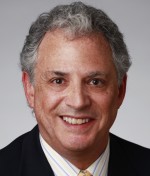 How can public agencies at the federal, state and local levels use analytics — including test and learn strategies — to tackle their toughest challenges? We get insights from Dean Silverman, the founder and former head of the IRS Office of Compliance Analytics (OCA), which launched in 2011.