Results-focused city government through SomerStat: An interview with Joseph Curtatone, Mayor of Somerville, Massachusetts – Episode #8
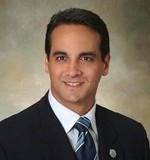 At about 4 square miles large, with a population of about 80,000, Somerville shows other smaller jurisdictions that don’t need to be a big city to have a sophisticated performance improvement focus. For larger jurisdictions, including our biggest U.S. cities, Somerville’s experience presents a challenge: If it can develop such a robust data-driven management focus, then cities with much larger resources should be able to as well.
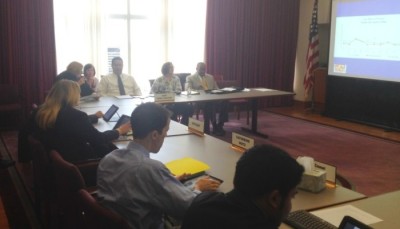
Among Somerville’s innovations, probably the best known is SomerStat. It has a staff of four who study financial, personnel, and operational data to understand what’s happening within city departments. Then, about every two months for bigger agencies (I mistakenly said weeks in the video intro), and less frequently for smaller agencies, each department leadership team comes to a SomerStat meeting to meet with the mayor’s staff—often including the mayor himself—to review detailed performance data and discuss ways to improve.
In the meetings, the department director stands behind a podium and presents a PowerPoint presentation on detailed aspects of department performance to the mayor and his staff. It’s not a one-sided presentation, but rather a lively and detailed discussion involving questions and direction for that department leader and his or her senior staff in the room.
To learn more about SomerStat, we’re joined by Joseph Curtatone (@JoeCurtatone), the mayor of Somerville, who launched SomerStat after being first elected in 2004. Today he is in his fifth term.
Web extra: To better understand SomerStat, here are some example presentations from actual SomerStat meetings from previous years. They are from departments relating to capital projects, constituent services, fire, IT, police, and recreation.
 Rebecca Unterman is a research associate at
  Stephanie Fanjul is the Executive Director of Smart Start in North Carolina. Smart Start was created in 1993 by Governor Jim Hunt as an innovative way to tackle an important problem: Children were coming to school unprepared to learn. A related challenge was that childcare in North Carolina was poorly financed, fragmented, and often low quality.
 StateStat is part of a broader, growing movement of “Stat” initiatives. It all started in the early 1990s when the New York City Policy Department, under William Bratton, launched CompStat. Martin O’Malley took the idea to the city level as mayor of Baltimore with
  At the time of this interview, Beth Blauer was the Director of StateStat in Maryland for Governor Martin O’Malley. In her role she oversaw the StateStat process, covering 14 state agencies that comprise 85% of the state budget. A Maryland native and a lawyer by training, she served in Maryland state government for a decade and was StateStat’s director since 2008. In August 2012 she left Maryland government to begin a new role in the private sector.
 Bruce Katz is a vice president at the Brookings Institution and founding Director of the Brookings Metropolitan Policy Program. He regularly advises public leaders on policy reforms that advance the competitiveness of metropolitan areas. He has served in several senior roles in government including as a top aid to the Secretary of Housing and Urban Development.
 Carolyn Heinrich is a professor at the Lyndon B. Johnson School of Public Affairs at the University of Texas at Austin and the Director of their
  What are the some of the key longer-term trends in job quality and dynamics in the U.S. and what are the implications for U.S. workers? To explore that topic, we’re joined by a leading expert on those topics, Harry Holzer. He is a Professor of Public Policy at Georgetown University and the former Chief Economist at the U.S. Department of Labor. He has written widely on the topic of low-wage labor markets and, in particular, the problems of minority workers in urban areas. He is also the co-author of the book
  How can a better understanding of the connections between educational outcomes and poverty help policymakers and educators to design more effective strategies to help all students succeed, particularly those from more disadvantaged backgrounds? To explore that question, we’re joined by Helen Ladd. She is a Professor of Public Policy Studies and a Professor of Economics at Duke University and an expert on education policy. She also recently concluded her term as president of the Association of Public Policy Analysis and Management (APPAM).