The role of a Chief Evaluation Officer: An interview with Demetra Nightingale, Chief Evaluation Officer, U.S. Department of Labor – Episode #42
 For public agencies at the federal, state or local levels that want to strengthen their evaluation capacity, creating a Chief Evaluation Officer role can be an important step. A leading example comes from the U.S. Department of Labor. The Chief Evaluation Officer position was created within the Department in 2010 in order to coordinate the Department’s evaluation agenda and work with the 17 agencies within the Department to design and implement evaluations. Today, the office has a staff of about ten people. It is led by Demetra Nightingale who has served as the Chief Evaluation Officer since 2011. The office is guided by a the Department of Labor’s Evaluation Policy, which emphasizes rigor, relevance, transparency, independence and ethics.
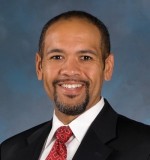
Demetra Nightingale join us to discuss the role that she and her office play. A researcher, evaluator and social policy expert, she was appointed as Chief Evaluation Officer after a 29 year career at the Urban Institute.
Web extra: Demetra Nightingale describes the new Data Analytics Unit within her office. [click here].

 The nonprofit Partnership for Public Service recently released a

 The City of Louisville is entering year three of its data-driven performance improvement initiatives under Mayor Greg Fischer, such as
  Can text messages be a useful and effective way for public agencies to communicate with citizens? If so, what elements of message design, including personalization (using people’s names), are most effective? And more broadly, how can public leaders at the local, state or federal levels use rapid and low experiments to pilot potential operational improvements to their programs or agencies and rigorously test if they work?
 How can public leaders encourage greater use of program evaluation to learn what works and to improve outcomes for citizens? One important part of the answer, noted
  How can public officials move beyond guesses and hunches to more data-driven decision-making? One approach borrows from the health field, where randomized drug trials are a standard way to test the efficacy of potential pharmaceutical treatments. Leading companies also use randomized experiments — making operational changes to see if they work better — to improve their products and services. This same approach can be used in public policy, with individuals randomly assigned to a program group and a control group, in order to rigorously test what works and improve program performance. The approach is known as randomized controlled trials (RCTs) or impact evaluations using an experimental design.
 How can a social service agency, whether at the state or local level, create an organizational culture focused on results? How can it create ongoing, meaningful conversations among agency leaders and staff that drive meaningful improvements? To explore these issues, we’re joined by Reggie Bicha (